Nils Reed · 7 September 2026
Layered Encryption Pathways in Isolated Virtual Strongholds
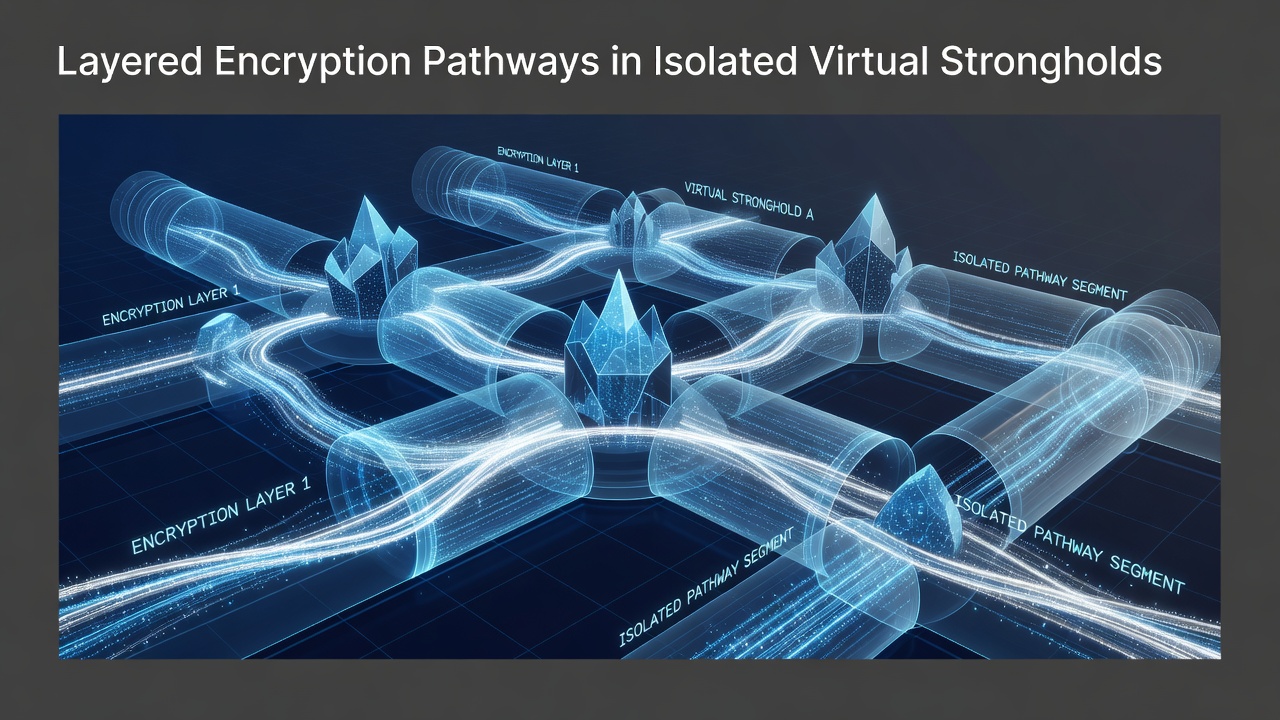
Isolated virtual strongholds represent self-contained computing environments that operate with strict separation from external networks, and experts in cybersecurity describe them as virtualized instances equipped with hardware-level isolation features such as trusted platform modules and secure enclaves. These setups rely on layered encryption pathways that route data through successive cryptographic stages, each adding distinct keys and protocols, while the entire structure remains detached from broader infrastructures to minimize exposure risks.
Core Components of Isolated Virtual Strongholds
Virtual strongholds function through hypervisor-enforced boundaries that prevent direct memory access between instances, and data within them undergoes initial encryption at the storage layer using algorithms like AES-256 before additional transformations occur at the network boundary. Observers note that pathways emerge when encrypted packets traverse virtual switches equipped with their own encryption overlays, creating sequential barriers that require coordinated key exchanges at each hop, although synchronization depends on pre-shared certificates managed through isolated key distribution servers.
Mechanics of Layered Encryption Pathways
Layered encryption begins with symmetric ciphers applied at the data origin, then shifts to asymmetric methods for transit between stronghold segments, and finally incorporates integrity checks via hash chains that verify each layer independently. Researchers have documented how these pathways incorporate homomorphic encryption elements in select implementations, allowing computations on ciphertext without decryption at intermediate points, and this design supports operations across multiple virtual boundaries while preserving confidentiality throughout the process. In practice, one pathway might start with file-level encryption inside a stronghold, proceed through a virtual private link secured by post-quantum algorithms, and end at a destination enclave where a separate decryption module unwraps the final layer only after authentication succeeds.
Studies from academic institutions reveal that pathway efficiency improves when key rotation schedules align with virtual machine migration events, and systems tested in controlled environments demonstrated reduced latency when elliptic curve cryptography handled the outer layers while lattice-based schemes protected inner data segments. Data indicates that failures often trace to mismatched protocol versions between layers, prompting developers to standardize interfaces through frameworks published by international standards bodies.
Implementation Patterns Observed in Recent Deployments
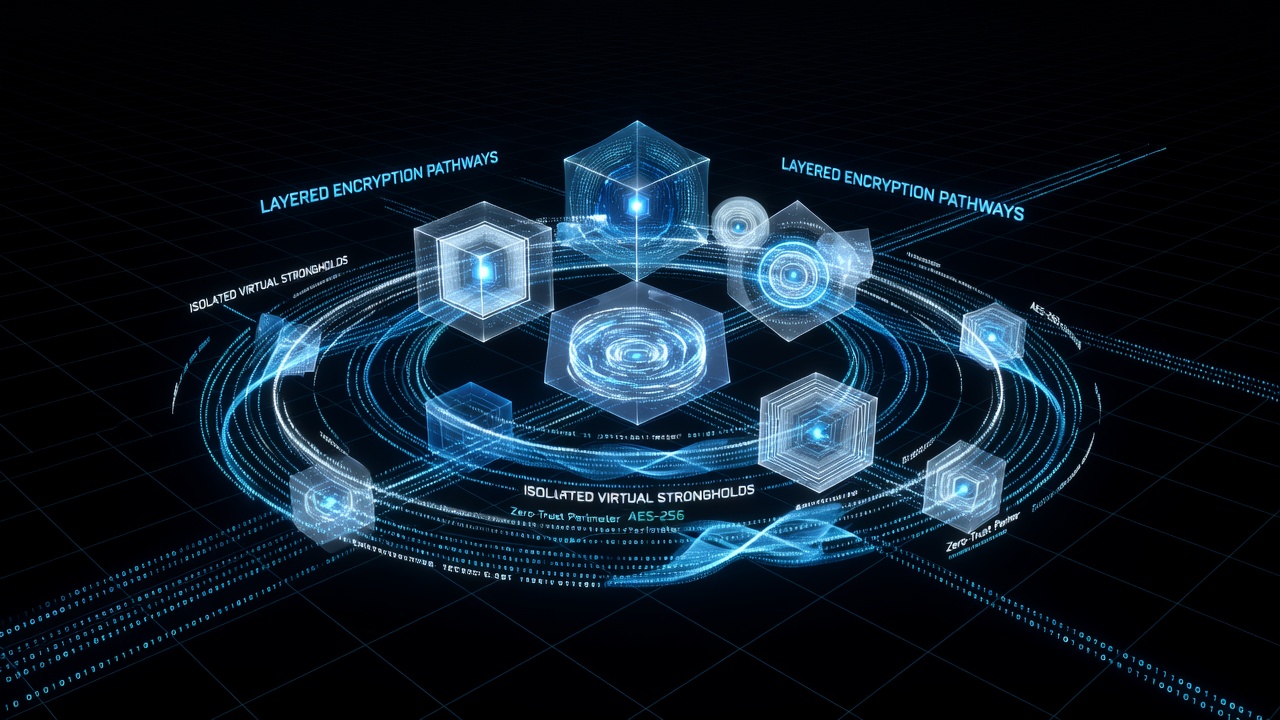
Organizations deploy these systems in sectors handling sensitive records, where one common pattern involves nesting multiple strongholds inside a primary virtual cluster and routing all inter-stronghold traffic through a dedicated encryption broker. According to documentation from the National Institute of Standards and Technology, such configurations align with zero-trust principles that treat every internal pathway as potentially compromised, requiring continuous verification at each encryption boundary. In September 2026, presentations at an international cybersecurity symposium highlighted updates to pathway orchestration tools that automate layer selection based on data classification tags, and figures from those sessions showed adoption rates climbing in government and research networks across North America and Europe.
Another pattern documented by analysts involves hybrid pathways that blend classical and quantum-resistant algorithms within the same virtual link, allowing gradual transitions without disrupting existing strongholds. Evidence from field reports shows that monitoring tools track encryption state across layers by logging metadata hashes rather than exposing plaintext, which supports audit requirements while maintaining isolation. Those who manage these environments often integrate logging agents that operate inside each stronghold yet forward only encrypted summaries to central analysis platforms.
Challenges in Pathway Maintenance and Scaling
Key management across layers presents ongoing difficulties because each stronghold maintains independent certificate authorities that must synchronize without direct connectivity, leading administrators to use out-of-band channels for updates. Research indicates that scaling pathways to accommodate growing numbers of virtual instances increases the complexity of routing decisions, since every additional layer multiplies the possible failure points during key negotiation. Observers have recorded cases where software updates to one encryption module propagated incompatibilities to downstream layers, necessitating coordinated rollback procedures across the entire virtual infrastructure.
Performance measurements collected by industry groups demonstrate that layered approaches introduce measurable overhead in high-throughput scenarios, yet optimizations such as hardware-accelerated cryptographic operations mitigate much of the impact when deployed on compatible processors. Canadian Centre for Cyber Security guidelines emphasize testing pathway resilience through simulated breach exercises that attempt to compromise individual layers without affecting others, and results from those tests guide refinements in protocol stacking.
Conclusion
Layered encryption pathways in isolated virtual strongholds continue to evolve through coordinated efforts among standards organizations, research institutions, and technology providers, with ongoing work focusing on automation and compatibility across diverse virtual platforms. Data from multiple regions shows steady integration of these methods into environments that demand strict compartmentalization, and future adjustments will likely address emerging computational threats while preserving the core isolation model that defines these systems.